Honestly,
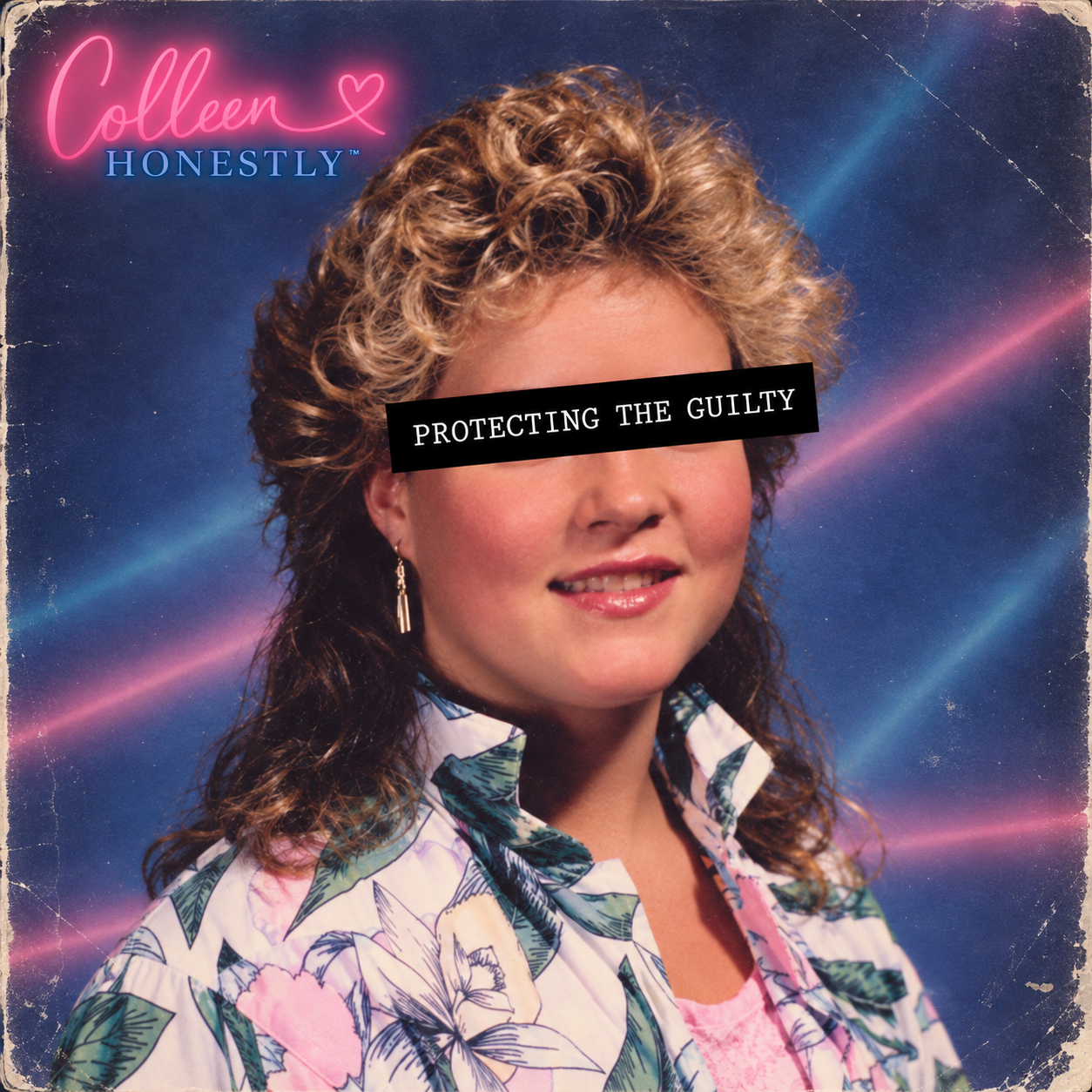
I have a school picture from fifth grade featuring what can only be described as a mullet.
Except it wasn’t business in the front and party in the back.
It was just party all over.
The amount of babysitting money I spent on hair picks was significant. I needed to keep at least one in my pocket at all times in case the party started to mat like a poodle.
This was the 1980s.
We had not yet learned that volume was something hair could have too much of.
But the funniest part of this picture is not the haircut.
The haircut certainly makes a strong opening argument, but it is not the actual story.
The actual story is that I am wearing my sister’s clothes.
Without permission.
I knew she would never let me wear them, so I did what any reasonable fifth-grade child would do:
I smuggled the entire outfit to school and changed when I got there.
This was not a last-minute decision involving one borrowed sweater.
I had planned a complete look.
I am pretty sure there was a pink corduroy skirt. There were control-top pantyhose—the kind that came in a plastic container shaped like an egg. There were wedge heels. There were shoulder pads.
To round things out, I even took her beaded necklace.
The outfit had been a gift from our aunt and uncle, which I’m sure made my unauthorized use of it feel even more special to everyone involved.
They say imitation is the highest form of flattery.
My sister had worn the exact same outfit in her school picture the year before, so apparently I was extremely flattering—and committed enough to produce professionally printed evidence.
Again, I was in grade school.
I looked less like a child arriving for school pictures and more like a regional sales manager attending an important luncheon.
Apparently, I had decided that if my hair was going to be party all over, the rest of me needed to be prepared to discuss fourth-quarter projections.
I knew my sister would say no.
That is why I didn’t ask her.
And for the record, even in my little fifth-grade brain, I did not consider this stealing.
I was going to bring everything back.
Therefore, obviously, I was borrowing.
Was there permission involved in this borrowing?
No.
But apparently fifth-grade me considered that more of a technicality than a requirement.
At the time, I probably considered this excellent problem-solving.
I anticipated the obstacle.
I identified an alternative course of action.
I executed the plan.
What I did not do was think beyond the end of the school day.
It never occurred to me that the purpose of school-picture day was to take a picture.
A picture that would be printed.
In multiples.
And sent home.
I had carefully concealed the clothes, changed at school, accessorized down to the borrowed-without-permission necklace, and stood directly in front of a professional photographer.
I had planned for every part of the crime except the part where they printed the evidence.
And somewhere between the control-top pantyhose and the shoulder pads is actually a pretty good workplace lesson.
To be clear: we don’t steal other people’s work.
We give credit. We respect ownership. We don’t take someone else’s idea, put our name on it, and pretend it came from us.
But we do learn from each other.
In fact, most of us have built pieces of who we are professionally by watching people we admire.
We watch someone handle a difficult conversation and think, I’m going to remember that.
We hear a leader ask a question that completely changes the discussion and tuck it away for later.
We see someone create a better process, organize information differently, make a meeting easier, communicate more clearly, or solve a problem in a way we never would have considered.
We ask questions.
We learn.
We borrow approaches.
We carry forward lessons people have graciously shared with us.
We give credit when credit is due.
And then we take what we’ve learned and develop our own way of doing things.
That isn’t stealing. That’s how people grow.
Sometimes workplaces get weirdly territorial about ideas.
That’s my process.
I came up with that.
She’s using my template.
He’s doing the thing I started.
There is absolutely a difference between learning from someone and taking credit for something they created.
But there is also something incredibly generous about letting a good idea travel.
If something you taught makes another person better at their job, that doesn’t diminish your contribution.
It may be one of the best signs that your contribution mattered.
The best leaders I’ve worked with weren’t trying to make themselves indispensable by keeping everything they knew locked inside their own heads.
They shared.
They taught.
They let people learn alongside them.
And eventually, the people around them developed ideas and approaches of their own.
Maybe that’s one measure of influence we don’t talk about enough.
Not how many people know an idea started with you.
But how many people became better because you were willing to share it.
Give people something worth carrying forward.
And this one is dedicated to all of the people who have done exactly that for me over the years.
The peers who let me sit beside them and see how they did it.
The mentors who answered my questions, shared what they knew, and never acted like helping someone else grow somehow made them smaller.
The leaders who let me watch them navigate hard things and graciously allowed me to learn from their example.
There are pieces of so many people in the way I work, lead, think, solve problems, and show up for others today.
You gave me permission to watch.
To learn.
To borrow the good stuff.
To walk in your footsteps for a while until I figured out which steps were mine.
Thank you for letting me learn from you—and for trusting me to eventually make those lessons my own.
And finally, to the person who apparently started this entire professional-development strategy:
My sister.
I maintain that I was going to bring everything back.
Fifth-grade me would therefore like the record to reflect that this was borrowing.
Borrowing without permission, apparently.
Which, now that I have written it down, is admittedly not the strong legal defense I thought it was.
Sorry, Sis.
Still a great outfit.